
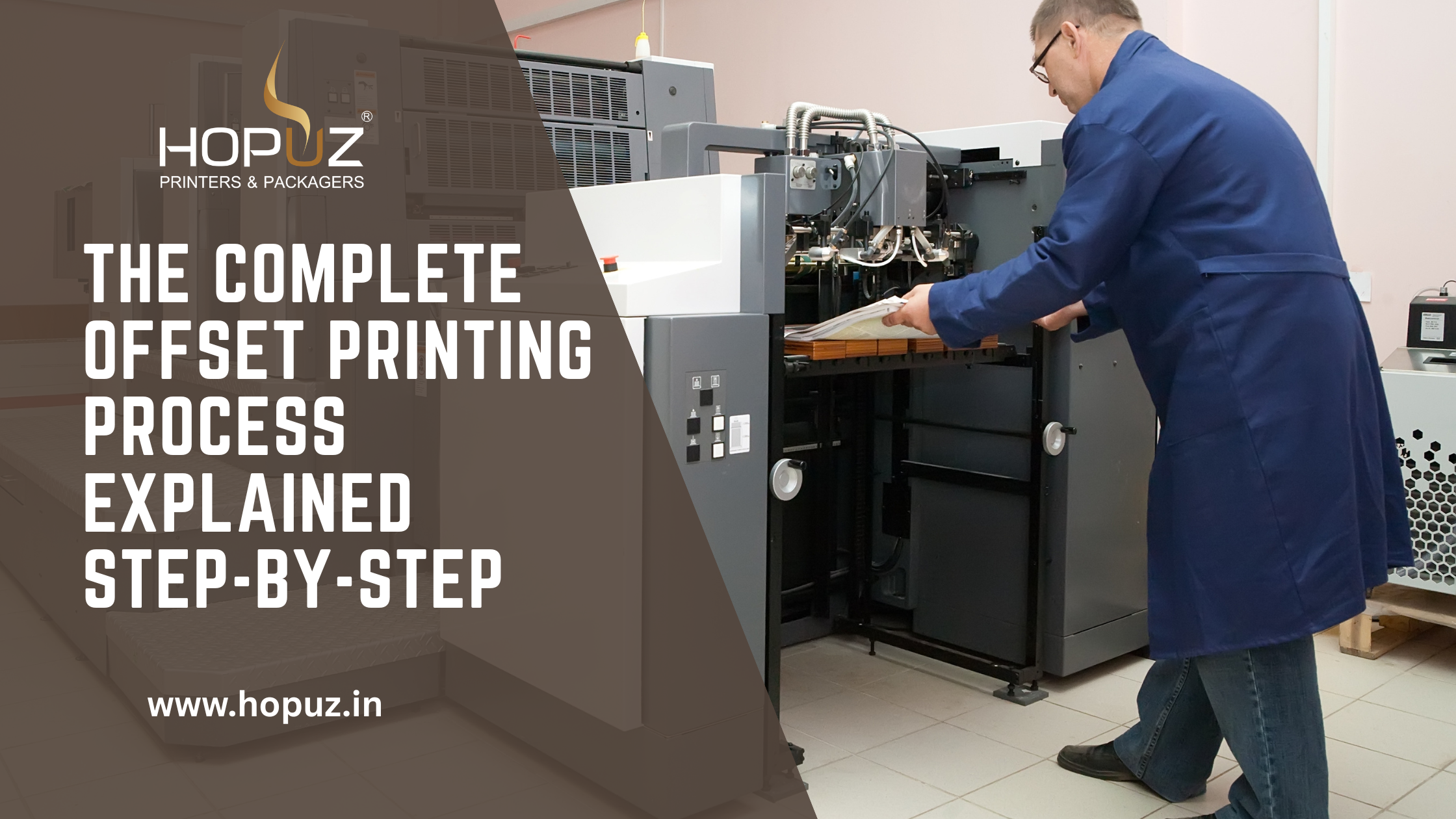
It can very well be stated that in a field like business and trading, the importance of the quality of printed materials can never be emphasized enough. Whether it is a brochure, a business card, a magazine, or a package, the quality of the printing reflects volumes about the quality of your business. And it is in such a context that the offset printing process takes center stage as the most trusted form of printing.
Thus, if you are looking for offset printing in Malappuram, or if you are looking for offset printing in calicut, or if you are looking for offset printing in Thrissur, or if you are looking for offset printing in Palakkad, what is very important is to first gain an in-depth knowledge about the offset printing process. Let’s take a step-by-step look at the offset printing process.
What is Offset Printing?
Offset printing is a traditional printing technique that makes use of the process of transferring an image from a plate to a rubber blanket and then to the printing surface. Offset printing is best known for the quality and affordability of the output.
Step 1: Design Preparation
The first step in the offset printing process is preparing the design. This includes creating or finalizing the artwork using professional design software like Adobe Illustrator, Photoshop, or InDesign.
Key elements considered during this stage:
- Proper resolution (usually 300 DPI for print)
- Correct color mode (CMYK instead of RGB)
- Bleed and margin settings
- Font clarity and alignment
A well-prepared design ensures that the final print will be sharp, vibrant, and error-free.
Step 2: Pre-Press Process
Once the design is ready, it moves to the pre-press stage. This is where the digital file is converted into a format suitable for printing.
This stage includes:
- Proofing the design to check for errors
- Color correction and adjustments
- Imposition (arranging pages correctly for printing)
- Creating printing plates
Pre-press is a critical step because even a small mistake here can affect the entire batch of prints.
Step 3: Plate Making
Metal plates made of materials like aluminum are used in a certain procedure of offset printing.
On an average, four metal plates are made to print a picture in colors like:
Cyan
Magenta
Yellow
Black
These metal plates are fixed in a printing press. The accuracy of metal plates must be maintained.
Step 4: Ink and Water Balance
The fundamental principle behind the offset printing press is “oil and water don’t mix.”
The image area is where the ink is attracted
The non-image area is where the water is attracted
It is extremely important to get the balance of ink and water just right, to ensure there is no smudging of the print.
This is one skill that is required by individuals in the professional industry, such as offset printing in malappuram, offset printing in Calicut, offset printing in Thrissur, and offset printing in palakkad.
Step 5: Printing Process
And now comes the main stage—the actual printing.
Here’s how it works:
The plate gets inked
The image gets transferred to a rubber blanket
The blanket then presses the image onto the paper
This process not only gives better results but also increases the life of the plate. It also allows printing on various surfaces.
Offset printing machines are capable of printing thousands of copies in a short time.
Step 6: Drying Process
Once this is done, there is a need to dry the ink completely. There are various ways in which the ink drying process occurs depending on the type of ink and paper used, and they are as follows:
Absorption of ink by paper
Oxidation (Air drying)
Heat/UV curing (in high-end machines)
Step 7: Finishing Touches
After the drying, various processes are carried out to make them more attractive and convenient to use.
The processes involved are:
Cutting and Trimming
Folding
Binding (books and magazines)
Laminating (Gloss and Matte Finish)
Embossing/Debossing
UV Coating
The output obtained from all the above processes is highly professional.
Why Choose Offset Printing?
Offset printing is a favorite among businesses as it offers many advantages to them. These advantages are as follows:
High Quality
Clear and precise images with high color accuracy are possible with offset printing.
Cost-Effective for Bulk Printing
The cost per product also comes down when printing in bulk.
Versatility
Can be used to print on different materials such as paper, cardboard, etc.
Consistency
Offset printing is best for uniformity.
Offset Printing vs Digital Printing
While it may be effective for small quantities of printing, offset printing is best for larger quantities.
Feature
Offset Printing
Digital Printing
Cost for bulk
Setup time Longer Short Best for Large volumes Small runs
If you are in need of printing in bulk for your business and are in search for high-quality printing, then offset printing is best for your business.
Selection of the Right Offset Printing Service
While selecting the right offset printing service, the following factors need to be kept in mind:
Experience and expertise Quality of machines Turnaround time Pricing
Customer support
Any business that wants to make use of the offset printing service in Malappuram, offset printing service in Calicut, offset printing service in thrissur, offset printing service in Palakkad, etc., needs to look for quality.
Conclusion
The offset printing service is a highly structured and efficient service that provides quality output to businesses of all sizes. Each step involved in the offset printing service is of prime importance to provide quality output.
If you want to make use of the best quality offset printing in Malappuram, then hOPUZ is the name to trust and rely upon. We are dedicated to provide quality output to our customers and are known to be one of the best in the industry.